

2025-26
Breakthrough Artist Fellows
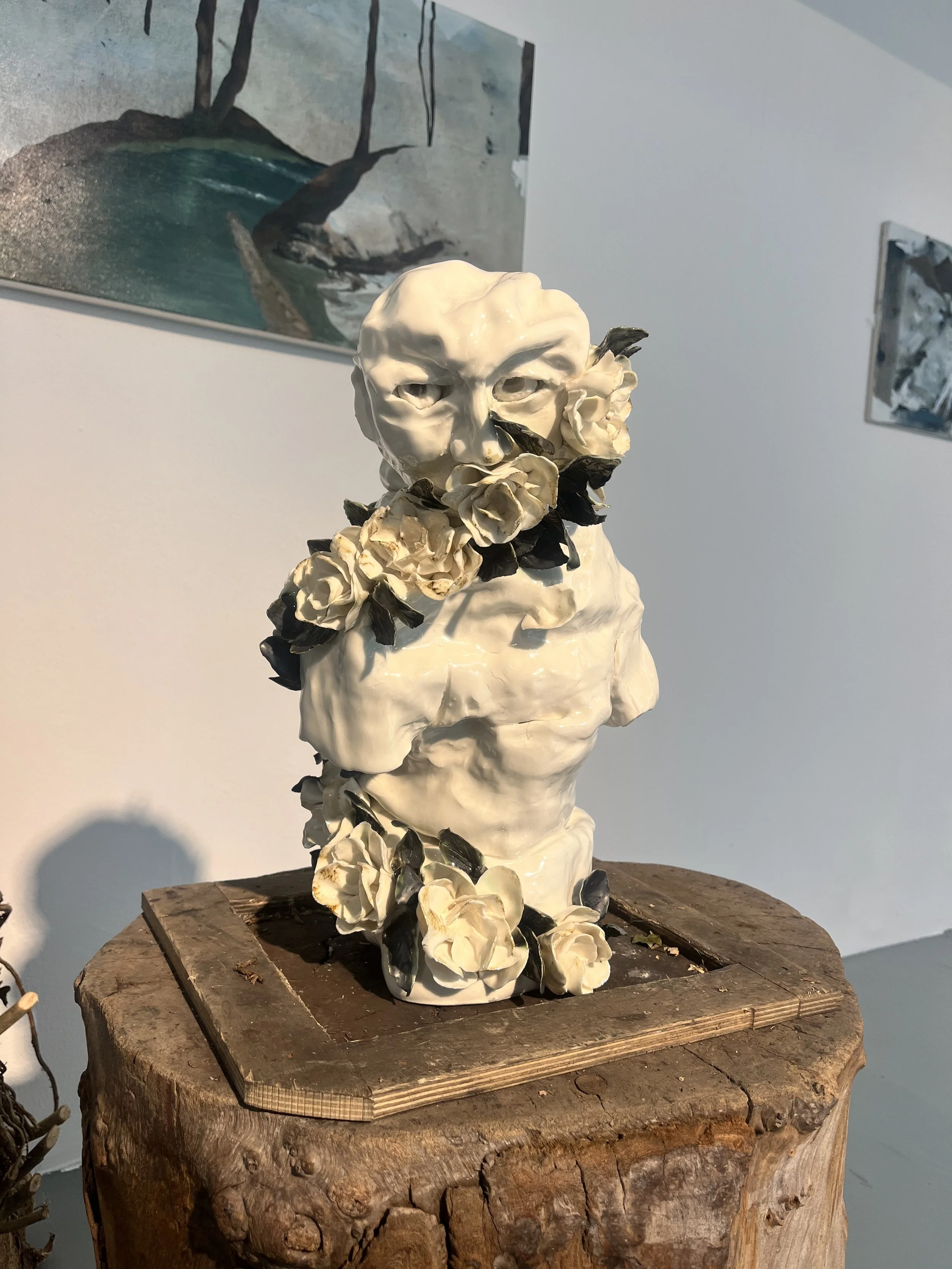
Growth (2025), porcelain clay glazed
Evelyn Baker
Liverpool Hope University
Evelyn Baker is an artist whose practice investigates the intersection of spirituality, nature, and the uncanny. Inspired by Mark Fisher’s writing on the weird and the eerie, she creates distorted representations of organic forms, offering glimpses into liminal spaces where the familiar becomes unsettling.
Through painting, sculpture, and installation, Evelyn channels her fascination with unseen energies and spiritual essence. Her works — ranging from eerie woodland imagery to surreal floral forms — invite viewers into encounters with otherworldly presences and the intangible forces that shape human existence.
Her recent projects have incorporated elements of the supernatural and the folkloric, exploring how myth, ritual, and the natural environment become portals to unseen realities.
Evelyn’s practice is grounded in the belief that art can reveal hidden dimensions of the world, provoking contemplation about life, death, and the unseen spaces in between.

From flesh to field (2025)
Rudaina Chowdhury
Cardiff School of Art and Design
Rudaina Chowdhury is an artist whose practice explores trauma, memory, and the embodied experience of pain. Through film, performance, and object-making, she translates internal states into tangible forms, creating works that reflect the lingering effects of suffering on both mind and body.
Her handmade props and 3D structures often serve as physical manifestations of psychological burden, simultaneously heavy and transformative. By embodying discomfort and vulnerability, Rudaina’s practice holds space for reflection on the struggle between containment and release.
Her performances and moving image works oscillate between resistance and surrender, revealing how pain shapes identity while pointing towards the potential for healing and connection.
At its core, Rudaina’s work is an exploration of the universality of suffering and resilience, offering viewers a reminder that even in pain, there is meaning, solidarity, and the possibility of renewal.

Untitled (2025)
Olivia Davis
Loughborough University
Olivia Davis is a multimedia artist whose work critically examines the female nude and its ongoing role in art history. Through self-directed imagery and installation, she reclaims authorship over the female body, reframing traditional representations to confront themes of agency, consent, and the gaze.
Working primarily with self-portraiture, Olivia challenges the conventions of the nude, offering nuanced and personal perspectives that resist idealisation. By embedding her practice within both historical and contemporary contexts, she interrogates how depictions of the body continue to shape experiences of womanhood.
Her recent explorations expand into immersive environments that heighten sensory and spatial engagement. These installations shift the viewer’s role from passive observer to active participant, disrupting ingrained ways of looking at the female body in art.
Through this practice, Olivia invites audiences to engage critically with the ethics of representation while fostering new modes of connection between viewer and subject.
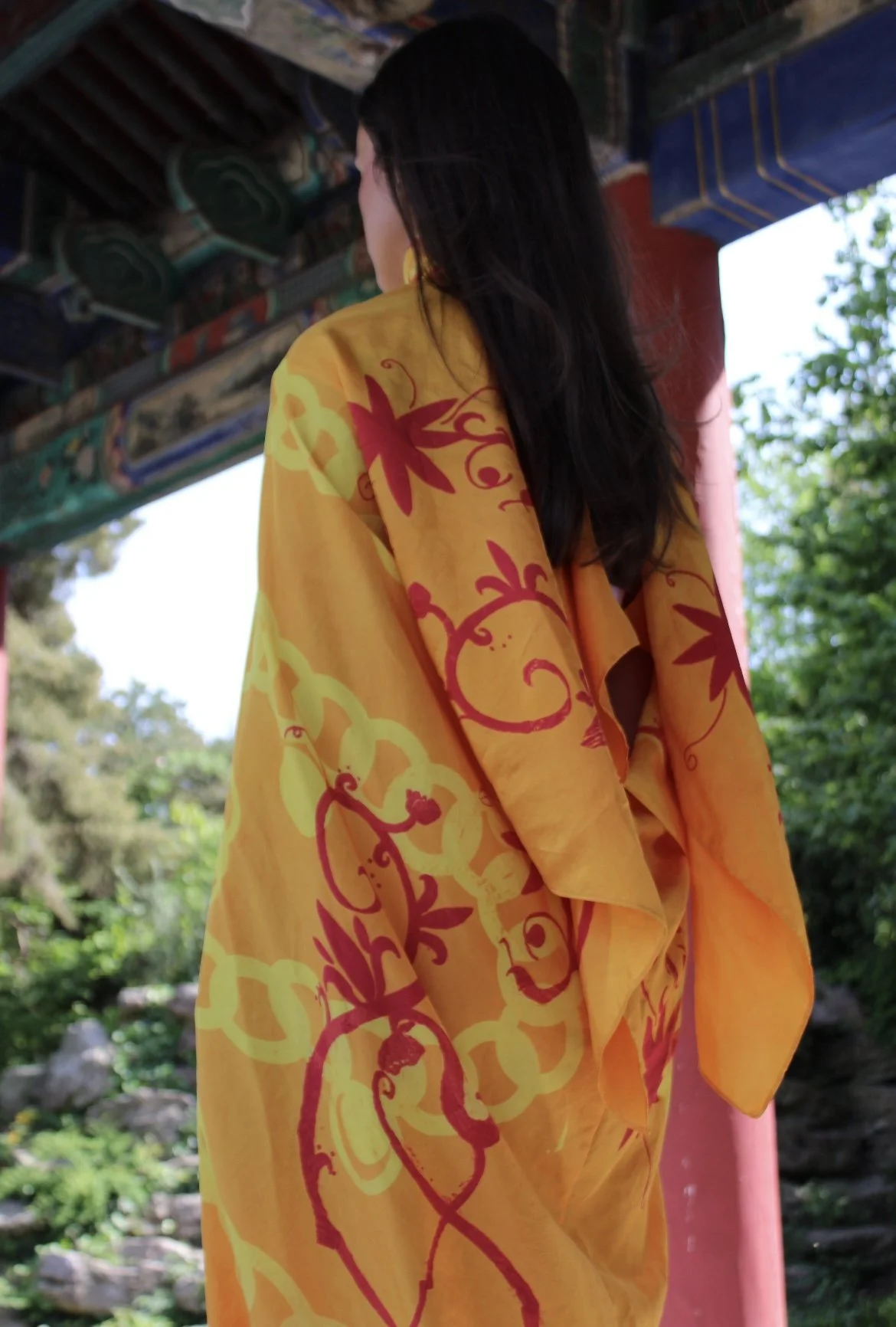
Orange Silk Print Dress (2025)
Erin Eaves
Liverpool Hope University
Erin Eaves is an emerging designer and maker whose practice explores the intersections of sustainability, wearable art, and social debate. Graduating in 2025 from Liverpool Hope University with a degree in Art & Design History and Contemporary Fashion Design, she investigates the role of fashion as both art and industry, questioning its cultural significance through her work.
Working across fabric, metal, and recycled materials, Erin creates expressive and vibrant designs that range from one-of-a-kind jewellery to bold textile pieces. Her projects often transform second-hand and sustainable materials into works that challenge the boundaries between fashion, craft, and fine art.
Alongside her material practice, Erin engages critically with debates on accessibility, affordability, and the impact of fashion on identity and society.
Driven by a commitment to both innovation and sustainability, Erin seeks to develop wearable art that celebrates individuality while sparking dialogue about fashion’s evolving place in culture.

Not That One (a doppel for the fool) (2025), performance view
Emily Hought
Loughborough University
Emily Hought is a multimedia and performance artist whose practice centres on the creation of solitary live characters that act as performative guises to navigate ritual, play, and social awkwardness. Beginning with abstract collages, she crafts masks, costumes, puppets, and dolls from papier-mâché, textiles, and cardboard, drawing inspiration from cubist portraiture, historical fashions, and traditions of masquerade.
Her handmade props and masks carry a sense of childlike nostalgia, inviting play and spontaneity into her creative process. By embodying these characters, Emily explores the absurd complexities of self-presentation and visibility, reflecting on how the desire to be seen shifts from childhood through adulthood.
Emily’s live performances often embrace discomfort, inspired by the Theatre of the Absurd. Through silence, awkwardness, and humour, she uses performance as a means to confront personal anxieties while reframing them as sites of transformation.
Her practice is rooted in the belief that play and absurdity can open space for reflection, self-invention, and new ways of understanding everyday life.

Daphne’s Passage #2 (2024), polaroid
Dione Jones
Swansea College of Art
Dione’s practice explores the porous and unstable realities of the feminine body — its ruptures, thresholds, and flesh. Positioned within the realms of the abject and the Other, the body remains central to their inquiry. Drawing upon historical references such as anatomical wax figures, they investigate how sculptural representations have shaped cultural perceptions of gender, desire, and decay.
Influenced by Julia Kristeva’s theory of abjection, Dione embraces a body without borders — one that leaks, disrupts, and unsettles. Within this space, horror and intimacy converge, where desire and fear coexist. Lucy Irigaray’s theory of the caress further informs their exploration, reframing touch as a relational and unknowable gesture, simultaneously tender and violent.
Dione introduces the concept of the abject-caress: a gesture that exists in the liminal space between comfort and discomfort, tenderness and disruption. Through this framework, their practice destabilises fixed identities and celebrates the grotesque, uncontainable power of the monstrous feminine.

Still image from video performance “Pulse” (2025), interaction between the body and knotted string forms sewn to recycled textiles
Heidi Lucca-Redcliffe
Swansea College of Art
Heidi Lucca-Redcliffe is a multidisciplinary artist based in South Wales. Her practice is rooted in autoethnographic exploration, using colour, material, and body as primary tools of investigation. Working intensively with the colour red, she creates immersive works that embody rawness, vulnerability, and intimacy.
Her process often involves the deconstruction of materials to reveal fragility, embedding themes of exposure and sensitivity into her work. By following intuitive, sensory-driven approaches, Heidi embraces spontaneity and play as part of her creative methodology.
Much of her practice questions the notion of self-portraiture, engaging in an ongoing iterative cycle that merges physical presence with material experimentation.
Heidi’s work foregrounds the body as both subject and medium, using materiality to trace the internal self and expand the language of personal representation.

A Year In My Life (2023), acrylic painted tapestry
Anna-Marie Gallares
University of Sunderland
Anna-Marie Gallares is a multidisciplinary artist based in Newcastle upon Tyne. Her practice spans acrylic painting, gelli printing, and textile-inspired formats, with a focus on narrative and material exploration rooted in her Filipino heritage. Drawing on personal experiences of migration, she explores themes of identity, memory, and cultural belonging through layered imagery and symbolic forms that evoke both fragility and resilience.
Anna-Marie has exhibited widely across the North East, including at the Northern Gallery for Contemporary Art, Middlesbrough Art Weekender, Arts Centre Washington Open Exhibition, The Customs House, and Rubber Duck Factory. In 2023, she was awarded the New Graduate Residency at Middlesbrough Art Week, where she developed new ideas and methods that continue to shape her studio practice.
Alongside her exhibitions, she regularly engages with participatory projects and public programming. She has delivered workshops with The Cultural Spring, Projects4Change, and Art of Protest Projects, and previously worked at Gateshead College as an Art Technician and Casual Teacher, supporting young creatives in Art, Media, and Design.
Committed to both personal storytelling and collective engagement, Anna-Marie uses art as a tool to build connection, celebrate diverse narratives, and foster inclusive creative spaces.